I'm going to be starting a new series of posts that will be interleaved with the Know Your Wormhole Enemy series, titled Your First Wormhole, looking at how to identify a wormhole system class that will best suit your needs, what you need, and what you can expect from wormhole life.
Unfortunately the bare bones draft managed to get uploaded when I managed to mash the 'publish' button instead of the 'save' button when using my tablet - so apologies for the seemingly nonsensical post yesterday that has now been reverted back to draft status!
Saturday, 30 August 2014

Monday, 18 August 2014
Hyperion W-Space Changes: Predictions
If you haven't already, it's probably a good idea to read my analysis post to see the basis for the predictions that I am making in this piece.
With the current magnitude of the changes cruiser class and above ships are spawning significantly further away from the wormhole link than they were doing in the past - and doing so consistently. And this is still the case even with the most recent update to the mass-based spawn distance feature.
Although the distances involved are not massive, they are significant;
Combined with the first point, the second means that a fleet equipped with oversize afterburners, such as 100MN AB Tengus, will be in an even better position for starbursting away from a wormhole link and kiting their opponents than 'normal' kiting ships. I'm expecting to see many more such fleets in use in wormhole space after Hyperion.
The increase in average engagement range may well tip the balance slightly against the current Proteus-dominated heavy-blaster meta.
Scouting wormhole chains will become more important than it currently is, and rolling will be used less often when looking for PvP targets. For a given encounter, especially in higher-class wormhole systems, it will be less likely that an encounter with a hostile force will be in their static, and so in the general case it will be less likely that reinforcements will be one jump away.
Offsetting this, when a link does open into a system, there will be significantly less warning to any residents before a hostile fleet drops on them. For lower-class wormhole residents the new frigate-class wormhole links may also provide a significant threat; a few Assault Frigates can handily deal with a Drake running sites in a Class 1 or 2 wormhole system and won't immediately die to the Sleepers that are present.
The general increase in the interconnectedness of wormhole space will also result in more links threatening site runners, even if initially several jumps removed. I am expecting a slight increase in the price of Melted Nanoribbons as a result
After the change dual wormhole-space static links will make Class 4 systems prime real estate for PvP corporations who make their money outside of w-space.
W-space Combat Meta
I am expecting the wormhole changes, specifically those relating to mass-based spawn distance from wormholes, to have an effect on the wormhole space combat meta - assuming that the changes are not massively toned down given the community uproar.With the current magnitude of the changes cruiser class and above ships are spawning significantly further away from the wormhole link than they were doing in the past - and doing so consistently. And this is still the case even with the most recent update to the mass-based spawn distance feature.
Although the distances involved are not massive, they are significant;
- Currently you are almost guaranteed to leave a wormhole within warp scrambler and web range of a lone hostile pilot on a wormhole; after the changes the likelihood of this will be reduced - although not by as much as in the first draft of the numbers.
- As the distance is based on mass, modulating your mass using warp disruption bubbles, plates, and propulsion modules will affect the distance that you spawn from the wormhole.
- The increased volume of space that ships can spawn into will make de-cloaking Strategic Cruisers who are using the Covert Operations subsystem harder.
Combined with the first point, the second means that a fleet equipped with oversize afterburners, such as 100MN AB Tengus, will be in an even better position for starbursting away from a wormhole link and kiting their opponents than 'normal' kiting ships. I'm expecting to see many more such fleets in use in wormhole space after Hyperion.
The increase in average engagement range may well tip the balance slightly against the current Proteus-dominated heavy-blaster meta.
Fewer Capital Engagements
Due to the mass-based spawn distance when transiting a wormhole, capital ships will now spawn a significant and randomized distance away from wormhole links. This means that if a capital ship is jumped through a wormhole link into a fight, it will not be able to jump back out to safety if there is too much hostile pressure on the field. While this may sound like there will be more capital losses, the reality is that the increase in risk is so massive that most wormhole entities will simply not commit capital forces through a link.Less Rage-Rolling
Not a surprising prediction, perhaps, but an important one. Given the massive increase in time it will take for high-class wormhole links to have their statics rolled it will be significantly harder for groups to chain-collapse their static links to find a given system. This will make backing up invasion fleets or trying to defend against wormholes significantly more difficult. Hole control will become even more important.Scouting wormhole chains will become more important than it currently is, and rolling will be used less often when looking for PvP targets. For a given encounter, especially in higher-class wormhole systems, it will be less likely that an encounter with a hostile force will be in their static, and so in the general case it will be less likely that reinforcements will be one jump away.
Longer Wormhole Chains
Due to an increased number of random links, and the additional static on Class 4 wormhole systems, wormhole space will be generally more connected. Originally it sounded like the change to only spawn the K162 end of wormhole links when someone jumped through them meant that this would be balanced out, at least to an extent. Subsequent communications from CCP suggest that there will be a fail-safe method of some kind whereby the K162 side of the link will open after an amount of time, even if someone has not jumped through.Slight PvE Site Running Risk Increase
There are multiple changes affecting this particular aspect of wormhole life. There will be fewer people rage-rolling wormholes looking for targets, particularly in the higher class wormholes - and those that are chain collapsing their static link will be doing it more slowly due to the changes.Offsetting this, when a link does open into a system, there will be significantly less warning to any residents before a hostile fleet drops on them. For lower-class wormhole residents the new frigate-class wormhole links may also provide a significant threat; a few Assault Frigates can handily deal with a Drake running sites in a Class 1 or 2 wormhole system and won't immediately die to the Sleepers that are present.
The general increase in the interconnectedness of wormhole space will also result in more links threatening site runners, even if initially several jumps removed. I am expecting a slight increase in the price of Melted Nanoribbons as a result
C4 Inhabitant Roundabout
With the addition of an additional static to Class 4 wormhole systems I expect a significant number of existing inhabitants to move out. Prior to this change Class 4 systems were known for being relatively uninhabited and isolated and most inhabitants will have moved in with full knowledge of this. After the addition of a new static (that will be harder to roll) they will be be significantly more connected, and securing them by rolling the static links prior to running any sites will take significantly longer and be riskier.After the change dual wormhole-space static links will make Class 4 systems prime real estate for PvP corporations who make their money outside of w-space.
Sunday, 17 August 2014
More Hyperion W-Space Changes
On Friday CCP Masterplan posted on the EVE Online forums with news that as of the latest update on Singularity, wormhole signature IDs would no-longer reset at downtime.
To those who aren't denizens of wormhole space, this might sound like an insignificant change, but it will have a massive impact on Australian time-zone pilots and will be a significant quality of life improvement for all wormhole inhabitants.
For pilots in the Australian time-zone, the EVE server's downtime is right in the middle of their prime playtime (this can be dependent on daylight savings time). This currently means that in wormhole space, any signatures that have been scanned at the start of prime time will have their signatures invalidated half way through many player's gaming sessions. Although there are some discernible patterns for the signature ID changes, it is not always obvious, and so the change in signatures at downtime means having to update bookmarks and chain mapping tools or risk pilots getting confused.
For the wider wormhole community, this change won't be quite as significant, but will still be very welcome. At the moment the first thing that anyone does when logging on is to verify the signatures in their home system; updating the old bookmarks with new signature IDs and bookmaking any new signatures that have spawned. With signature IDs persisting over downtime this housekeeping task will no longer need to be carried out, saving time for hundreds of players and making it that little bit less onerous to be the first pilot online.
Tuesday, 12 August 2014
Hyperion W-space Changes: An Analysis
CCP Fozzie has recently posted a dev blog about some changes to wormhole space and wormhole links that are coming up in the Hyperion expansion. As they are likely to have a significant impact on the larger picture of wormhole space I thought I would take a post to carry out a bit of an analysis, and try and put out another post in a few days with some predictions that can be disproved in the fullness of time.
CCP Fozzie's dev blog post can be found here and should be read in its entirety before proceeding any further with this post.
The changes form a package, and they really need to be analysed as a package as they all affect wormhole space in different but connected ways. Because they are affecting the same game play system it is difficult if not impossible to assess the changes in isolation, so I will be assuming that all of the changes are going to be made, and that they are going to be made together. I'm going to look at each set of changes in turn, but will incorporate relevant information from the other changes in each section. I will also be (trying) to analyse the changes from a neutral point of view, simply providing an estimation of what the results of the changes are and not judge whether those changes are desirable or not.
Black Holes are having additional bonuses to missile velocity and missile explosion, alongside a bonus to targetting range and a reduction in the effectiveness of stasis webifiers. This will give a very significant bonus to people using kiting missile setups, especially 100MN afterburner cruiser variants as stasis webifiers will be significantly less effective against them. A typical method of engaging cruisers in Class 5 and 6 wormhole systems is to use heavy webbing support to bring ships to a near-standstill and then use the capital class guns found on dreadnoughts to obliterate (or 'blap') them - the tracking on capital class weapons normally being far too poor to cope with the movement of cruiser size targets. This change to stasis webifier effectiveness caused by Black Holes has a reasonable chance of completely invalidating this engagement method in those systems.
Magnetar wormholes are having a penalty applied to the effectiveness of target painters, which will make it slightly harder to run with the "blap dread and web" set-up described above, as target painters are often used to supplement stasis webifiers in making targets easier to hit. The missile explosion radius change will bring missile penalties in line with the tracking penalties applied in Magnetar systems.
Red Giant systems are having a bonus applied to the damage of bombs - but not to bomb hitpoints. This means that fewer bombers can be used to do the same damage in Red Giant systems. I'm not expecting this to be a major game changer.
Pulsar systems are having a bonus to Nosferatu and Energy Neutralizer drain amounts added to help counter the existing large bonus to capacitor recharge. Prior to this change capital ships were extremely hard to take down with neut boats.
Wolf Rayet systems currently have a bonus to armour resistances; this is being altered to be a bonus to raw armour hitpoints instead which will significantly lessen ship tanks when under logistics support. More significantly - given other changes that are lined up and that will be discussed later - the bonus to small weapon damage that already exists is being doubled, so the total damage bonus when in a Class 6 wormhole will be +200% of base, or, to put it another way, triple the dps.
Cataclysmic Variable systems will have their remote capacitor transmission amount reduced, and the penalty to their local capacitor level reduced from it's current level, giving them more local capacitor recharge. The intent of this change is to reduce the effectiveness of spider tanking carriers in systems with Cataclysmic Variables; as the efficacy of the change, I cannot comment due to lack of experience in that area.
The second change is a new type of random wormhole link - one that only allows enough mass per jump to get frigate or destroyer-class ships through it - or Heavy Interdictors using mass-reducing warp disruption bubbles.
This may provide a few new frigate-roam opportunities for wormhole residents, but as many wormhole pilots tend to use extremely expensive implant sets it might be fewer than would otherwise be the case. Where this addition will be most interesting is when there is a new-type wormhole link into a Wolf Rayet system where frigates will be doing three times normal damage - plenty enough to be seriously dangerous to Strategic Cruisers or possibly even players running capital escalations, given a significantly sized Assault Frigate gang.
As this is a retroactive change being made to systems regardless of whether they are inhabited or not, a significant number of wormhole residents currently in Class 4 wormhole systems may find themselves with an undesirable secondary static link. CCP Fozzie has stated that the type of the new static in systems will not be announced and that players will need to identify what the new static link type is by using the test server ('Sisi') if they want to find out ahead of the Hyperion release.
This is an extremely significant change with two obvious ramifications.
The first is that people inside the system that is being connected to will have significantly less warning that there is an inbound wormhole. Beforehand they had the length of a ship warp to the 'in' side of a wormhole during which the 'out' signature was visible but before anyone had jumped through. Post-Hyperion, the link will only appear after a ship jumps. This tips the scale significantly towards the hunters in wormhole space, particularly in higher-class wormholes where capital ships in siege or triage mode are frequently used in site-running.
The second is that pilots will be able to find out what an outbound link is before opening it. Currently you need to be on grid with a wormhole to verify where it leads - but being on grid with it means that you have warped to it, which means it is activated. After the Hyperion release, if you find that it is not a link you want to have active, for instance a wandering wormhole to higher-class space, you can just not jump through it, and the far end of the link will never spawn. This has the ability to significantly reduce the interconnectedness of wormhole space and counterbalance the increased number of wandering / random wormhole links.
Orcas and Battleships are the ships that are generally used to roll wormholes in lower class systems - and they have sufficient mass (and thus spawn far enough away) that they no longer spawn within range to jump back through the wormhole link. For higher-class wormhole links, capitals are often used to roll the wormhole links and they now spawn so far away from the link that the fastest way of getting them back to the wormhole link to jump back is to warp away to a safe nearby, and then warp back to the wormhole at point blank range.
This change will have two key effects on wormhole rolling; it will take longer, and it will be riskier.
It will now take significantly longer to roll wormholes; on the order of several minutes longer for rolling a hole using capital ships. A well drilled group in a high-class wormhole system can currently roll a wormhole every 2-3 minutes; most conservative estimates are suggesting that this will at least double. In lower-class wormhole systems the speed is generally dependent on how many Orcas you are happy to have floating around in space, but it will take at least a couple of minutes for an Orca to make it back from it's spawn distance to jump range on the wormhole link.
When trying to roll the wormhole with larger ships, especially capital ships, the risk will also be significantly higher. A capital ship will now be extremely vulnerable when jumping through a wormhole and there will be plenty of time for a hostile ship to get point on it and hold it in position until reinforcements arrive. At the moment when a less-powerful wormhole entity ends up with a link into a system controlled by a more-powerful group, they can take a risk and attempt to crash the wormhole link before the more-powerful group can marshal a response. Although the change to K162 spawning time will give a small initial time advantage to the group that is trying to roll the link, the time taken for even a single Orca or Capital ship to get back to the wormhole link completely eclipses that.
There is however a more concerning effect that this change may have on combat in higher-class wormhole systems. At the moment when ships jump through a wormhole link into a hostile force that is waiting for them, they are already at a significant disadvantage; in higher class wormholes in order to stand a chance the attacking force often has to throw through enough capital ships to collapse the hole. This results in a situation where the defenders are at their preferred range to targets, can re-ship if they take losses, can log on more reinforcements, and where the attackers have no-where to run.
Obviously the current situation is far from idea for attackers, and the home field advantage means that many groups will have to stand down instead of attacking and getting completely slaughtered. The new changes will result in a situation that is significantly worse for the attackers;
In the next post I'm going to take a look at what I expect the fallout from these changes to be.
CCP Fozzie's dev blog post can be found here and should be read in its entirety before proceeding any further with this post.
The changes form a package, and they really need to be analysed as a package as they all affect wormhole space in different but connected ways. Because they are affecting the same game play system it is difficult if not impossible to assess the changes in isolation, so I will be assuming that all of the changes are going to be made, and that they are going to be made together. I'm going to look at each set of changes in turn, but will incorporate relevant information from the other changes in each section. I will also be (trying) to analyse the changes from a neutral point of view, simply providing an estimation of what the results of the changes are and not judge whether those changes are desirable or not.
Bookmark Copy Restriction Changes
A minor change in the scheme of things, and the least interlinked with other changes; this is allowing players to copy larger groups of bookmarks, more quickly. This won't be at all significant for the majority of smaller wormhole groups, but alliances and less formally tied groups of corporations will find it a tremendous boon; their only method of sharing bookmarks is to manually copy them into cargo containers to move them from the 'Corporation Locations' of one corporation to another. Though this is a far cry from true alliance bookmarks in line with corporation bookmarks functionality, it will be a welcome stop-gap measure.Wormhole System Effect Changes
Black Holes are having additional bonuses to missile velocity and missile explosion, alongside a bonus to targetting range and a reduction in the effectiveness of stasis webifiers. This will give a very significant bonus to people using kiting missile setups, especially 100MN afterburner cruiser variants as stasis webifiers will be significantly less effective against them. A typical method of engaging cruisers in Class 5 and 6 wormhole systems is to use heavy webbing support to bring ships to a near-standstill and then use the capital class guns found on dreadnoughts to obliterate (or 'blap') them - the tracking on capital class weapons normally being far too poor to cope with the movement of cruiser size targets. This change to stasis webifier effectiveness caused by Black Holes has a reasonable chance of completely invalidating this engagement method in those systems.
Magnetar wormholes are having a penalty applied to the effectiveness of target painters, which will make it slightly harder to run with the "blap dread and web" set-up described above, as target painters are often used to supplement stasis webifiers in making targets easier to hit. The missile explosion radius change will bring missile penalties in line with the tracking penalties applied in Magnetar systems.
Red Giant systems are having a bonus applied to the damage of bombs - but not to bomb hitpoints. This means that fewer bombers can be used to do the same damage in Red Giant systems. I'm not expecting this to be a major game changer.
Pulsar systems are having a bonus to Nosferatu and Energy Neutralizer drain amounts added to help counter the existing large bonus to capacitor recharge. Prior to this change capital ships were extremely hard to take down with neut boats.
Wolf Rayet systems currently have a bonus to armour resistances; this is being altered to be a bonus to raw armour hitpoints instead which will significantly lessen ship tanks when under logistics support. More significantly - given other changes that are lined up and that will be discussed later - the bonus to small weapon damage that already exists is being doubled, so the total damage bonus when in a Class 6 wormhole will be +200% of base, or, to put it another way, triple the dps.
Cataclysmic Variable systems will have their remote capacitor transmission amount reduced, and the penalty to their local capacitor level reduced from it's current level, giving them more local capacitor recharge. The intent of this change is to reduce the effectiveness of spider tanking carriers in systems with Cataclysmic Variables; as the efficacy of the change, I cannot comment due to lack of experience in that area.
More and New Randomly Spawning (or 'Wandering') Wormholes
This item is actually a pair of changes, the first of which is very simple - there is going to be an increased incidence of randomly spawning wormhole links. This should, on the surface, result in an increased interconnectedness in wormhole space, but due to other changes that consequence may not necessarily be as clear cut as it might appear...The second change is a new type of random wormhole link - one that only allows enough mass per jump to get frigate or destroyer-class ships through it - or Heavy Interdictors using mass-reducing warp disruption bubbles.
This may provide a few new frigate-roam opportunities for wormhole residents, but as many wormhole pilots tend to use extremely expensive implant sets it might be fewer than would otherwise be the case. Where this addition will be most interesting is when there is a new-type wormhole link into a Wolf Rayet system where frigates will be doing three times normal damage - plenty enough to be seriously dangerous to Strategic Cruisers or possibly even players running capital escalations, given a significantly sized Assault Frigate gang.
Second Static for Class 4 Wormholes
With the Hyperion release Class 4 wormhole systems will have an additional wormhole-space static wormhole link. In the past Class 4 wormhole systems were well known for often leading into a seemingly never-ending chain of yet more Class 4 systems, frequently uninhabited. Introducing a second static link to all Class 4 systems will make them much more connected and very very appealing as a base of operations for PvP based groups that typically use their static wormhole link to look for targets to engage.As this is a retroactive change being made to systems regardless of whether they are inhabited or not, a significant number of wormhole residents currently in Class 4 wormhole systems may find themselves with an undesirable secondary static link. CCP Fozzie has stated that the type of the new static in systems will not be announced and that players will need to identify what the new static link type is by using the test server ('Sisi') if they want to find out ahead of the Hyperion release.
K162 appearance only on first jump
A 'K162' is the 'out' end of a wormhole link, and historically has spawned when someone has initiated warp to the 'in' end of a wormhole link. Wormholes that have not been warped to only exist in potentia; warping to one end of the link is what actually creates the link between the two systems.This is an extremely significant change with two obvious ramifications.
The first is that people inside the system that is being connected to will have significantly less warning that there is an inbound wormhole. Beforehand they had the length of a ship warp to the 'in' side of a wormhole during which the 'out' signature was visible but before anyone had jumped through. Post-Hyperion, the link will only appear after a ship jumps. This tips the scale significantly towards the hunters in wormhole space, particularly in higher-class wormholes where capital ships in siege or triage mode are frequently used in site-running.
The second is that pilots will be able to find out what an outbound link is before opening it. Currently you need to be on grid with a wormhole to verify where it leads - but being on grid with it means that you have warped to it, which means it is activated. After the Hyperion release, if you find that it is not a link you want to have active, for instance a wandering wormhole to higher-class space, you can just not jump through it, and the far end of the link will never spawn. This has the ability to significantly reduce the interconnectedness of wormhole space and counterbalance the increased number of wandering / random wormhole links.
Mass-Based Spawn Distance after Wormhole Jumps
This change will almost certainly have the most far-reaching consequences for the way that corporations that live in wormhole space operate. At the moment most PvP entities roll their wormhole relatively often when looking for new targets to fight and wormhole chains to explore.Orcas and Battleships are the ships that are generally used to roll wormholes in lower class systems - and they have sufficient mass (and thus spawn far enough away) that they no longer spawn within range to jump back through the wormhole link. For higher-class wormhole links, capitals are often used to roll the wormhole links and they now spawn so far away from the link that the fastest way of getting them back to the wormhole link to jump back is to warp away to a safe nearby, and then warp back to the wormhole at point blank range.
This change will have two key effects on wormhole rolling; it will take longer, and it will be riskier.
It will now take significantly longer to roll wormholes; on the order of several minutes longer for rolling a hole using capital ships. A well drilled group in a high-class wormhole system can currently roll a wormhole every 2-3 minutes; most conservative estimates are suggesting that this will at least double. In lower-class wormhole systems the speed is generally dependent on how many Orcas you are happy to have floating around in space, but it will take at least a couple of minutes for an Orca to make it back from it's spawn distance to jump range on the wormhole link.
When trying to roll the wormhole with larger ships, especially capital ships, the risk will also be significantly higher. A capital ship will now be extremely vulnerable when jumping through a wormhole and there will be plenty of time for a hostile ship to get point on it and hold it in position until reinforcements arrive. At the moment when a less-powerful wormhole entity ends up with a link into a system controlled by a more-powerful group, they can take a risk and attempt to crash the wormhole link before the more-powerful group can marshal a response. Although the change to K162 spawning time will give a small initial time advantage to the group that is trying to roll the link, the time taken for even a single Orca or Capital ship to get back to the wormhole link completely eclipses that.
There is however a more concerning effect that this change may have on combat in higher-class wormhole systems. At the moment when ships jump through a wormhole link into a hostile force that is waiting for them, they are already at a significant disadvantage; in higher class wormholes in order to stand a chance the attacking force often has to throw through enough capital ships to collapse the hole. This results in a situation where the defenders are at their preferred range to targets, can re-ship if they take losses, can log on more reinforcements, and where the attackers have no-where to run.
Obviously the current situation is far from idea for attackers, and the home field advantage means that many groups will have to stand down instead of attacking and getting completely slaughtered. The new changes will result in a situation that is significantly worse for the attackers;
- Ships jumping through will no longer appear in a coherent group that can support each other; they will be spread out according to their mass.
- Capital ships will no longer end up in close proximity to one another. As refitting capital ships using a carrier is a well established part of upper-echelon capital combat, attackers will be at a significant disadvantage compared to defenders
- Although larger ships will appear at random locations further from the wormhole, the lock times and maneuverability on those ships mean that they don't pose a significant risk to defenders who are caught by surprise if they appear closer than expected.
In the next post I'm going to take a look at what I expect the fallout from these changes to be.
Wednesday, 30 July 2014
Know Your Wormhole Enemy: Myrmidon
In the Know Your Wormhole Enemy series (name shamelessly stolen from the Eve Altruist series of posts and then mutilated) I'm going to look at a variety of different ships, how they are often fit and flown in wormhole space, and what they mean to you. This may include, but will not necessarily be limited to; example fits, engagement scenarios, how you should react to their presence on directional scan, at a POS or on grid, what good counters to them are, and how you can potentially use them.
This post will cover the Myrmidon.

In a break from tradition to demonstrate the flexibility of the Myrmidon I'm going to look at two example PvP fits, one active armour, and one full shield gank. The active armour fit is first:
It should be noted that juggling an overheated triple-rep dual-injected setup while targetting ships and maneuvering to apply damage and keep drones alive requires a huge amount of micromanagement. Without practice you will lose drones, run out of capacitor, burn out your modules, drop point on targets and end up stranded and butchered. With practice you'll feel like the king of the world. Have a shot - it's great fun.
And now, some more fun at the absolute opposite end of the spectrum.
This post will cover the Myrmidon.


Overview
The Myrmidon is a Gallente Battlecruiser that has bonuses to Drone damage and hit points, and a bonus to the effectiveness of local armour repairers. The lack of a bonus to weapons of a given type means that Myrmidons can be seen with a wide variety of weapons fit to their high slots and they have a good spread of available mid and low slots. This flexibility in fitting means that the Myrmidons is one of the more dangerous Battlecruisers to engage, as you will rarely know exactly what you are getting into when you engage one.
Despite the Myrmidon's bonus to active armour tanking it can frequently been seen in either active or passive configurations of armour or shield tanks.
The Eve Altruist post covering the Myrmidon and the other Battlecruisers can be found here.
Despite the Myrmidon's bonus to active armour tanking it can frequently been seen in either active or passive configurations of armour or shield tanks.
The Eve Altruist post covering the Myrmidon and the other Battlecruisers can be found here.
What is it used for in wormhole space?
Due to its flexibility the Myrmidon can be used for almost any role in wormhole space with varying degrees of effectiveness. Although sleepers NPCs have a nasty habit of targetting drones when there are lower numbers of ships in a site, the Myrmidon can still be used to run sites in Class 1 or 2 wormhole sites when correctly fit, and in a group is actually very effective in Class 3 wormhole space sites. With a large bonus to armour repairers, bait Myrmidons are relatively common in K-space, but creating a fit that can satisfy the requirements of both running W-space sites and baiting simultaneously is nigh-impossible. Myrmidons are seen relatively frequently running gas sites, where their armour repair bonus and drones allow them to mount gas harvesters and handle the sleeper NPCs that spawn at the sites while they are being run simultaneously.
PvP fit Myrmidons are highly effective using a passive shield tank or an armour tank - either active or passive. Shield Myrmidons are typically fit to push out a monstrous amount of damage and have relatively little tank, whereas armour fit Myrmidons can be almost anywhere along the scale of damage and resilience. A drugged, linked, active tanked Myrmidon can tank in excess of 1000dps which can allow it to handle a small sized gang solo... until its cap charges run out.
PvP fit Myrmidons are highly effective using a passive shield tank or an armour tank - either active or passive. Shield Myrmidons are typically fit to push out a monstrous amount of damage and have relatively little tank, whereas armour fit Myrmidons can be almost anywhere along the scale of damage and resilience. A drugged, linked, active tanked Myrmidon can tank in excess of 1000dps which can allow it to handle a small sized gang solo... until its cap charges run out.
How is it typically fit?
Although Myrmidons can run sites in lower-class wormhole systems, they are far from a typical sight. As a result, similar to the Cyclone, there is no real standardized fit for running them. The fit below is a variant on one I have successfully used to run combat sites in a class 2 wormhole, though there may be some room for improvement.
[Myrmidon, PvE Myrm]
Drone Damage Amplifier II
Energized Adaptive Nano Membrane II
Medium Armor Repairer II
Energized Adaptive Nano Membrane II
Drone Damage Amplifier II
Damage Control II
Stasis Webifier II
Cap Recharger II
Cap Recharger II
Omnidirectional Tracking Link II
Experimental 10MN Afterburner I
220mm Vulcan AutoCannon II, EMP M
220mm Vulcan AutoCannon II, EMP M
220mm Vulcan AutoCannon II, EMP M
220mm Vulcan AutoCannon II, EMP M
Coreli A-Type Small Remote Armor Repairer
Medium Auxiliary Nano Pump I
Medium Auxiliary Nano Pump I
Medium Capacitor Control Circuit I
Vespa EC-600 x5
Berserker II x4
Valkyrie II x5
The small remote armour repairer may look slightly out of place - the Myrmidon is sacrificing a potential turret to fit it - but Sleepers consistently target drones and some form of remote repair is essentially unless you're planning to only run a single site at a time. The fit is cap stable with either the afterburner or the remote armour repairer running, but not with both. It kicks out 577dps with max skills using the Berserkers, or an identical 577dps when using a Berserker / Valkyrie mix. While Ogres and Hammerheads may give the best theoretical damage, I find faster drones more useful. If your skills are a little lighter you may need to swap out one of the Drone Damage Amplifiers for another tanking module, which will drop your dps to a hair over five hundred.
I have experimented swapping the autocannons for railguns, which gave better range but with appalling tracking plus additional capacitor pressure, and for artillery, which was more cost effective with ammunition but had similar issues with tracking. Both alternatives give slightly reduced overall damage figures (ignoring their tracking issues), but in the end the drone damage is what the Myrmidon is about. It should be noted that the flight of EC-600s give you significantly more GTFO ability than many other site-running battlecruiser fits.
I have experimented swapping the autocannons for railguns, which gave better range but with appalling tracking plus additional capacitor pressure, and for artillery, which was more cost effective with ammunition but had similar issues with tracking. Both alternatives give slightly reduced overall damage figures (ignoring their tracking issues), but in the end the drone damage is what the Myrmidon is about. It should be noted that the flight of EC-600s give you significantly more GTFO ability than many other site-running battlecruiser fits.
In a break from tradition to demonstrate the flexibility of the Myrmidon I'm going to look at two example PvP fits, one active armour, and one full shield gank. The active armour fit is first:
[Myrmidon, Active Myrm]With max skills this is kicking out 483dps; nothing to write home about, but the tank is more significant. Without overheating or links it is repairing 941dps while there is nanite paste left in the Ancillary Armour Repairer, which drops to 654dps when it runs out. But if you apply heat, you're looking at 1171dps. Standard Exile boosters push it up to 1403dps on heat, and if you have a Damnation or other command ship running tech II Rapid Repair and Passive Defense links you will be repairing 2009dps while your capacitor, nanite paste and heat management hold out.
Medium Ancillary Armor Repairer, Nanite Repair Paste
Energized Adaptive Nano Membrane II
Medium Armor Repairer II
Energized Adaptive Nano Membrane II
Medium Armor Repairer II
Damage Control II
Stasis Webifier II
Medium Electrochemical Capacitor Booster I, Navy Cap Booster 800
Medium Electrochemical Capacitor Booster I, Navy Cap Booster 800
Warp Disruptor II
Experimental 10MN Afterburner I
220mm Vulcan AutoCannon II, Republic Fleet EMP M
220mm Vulcan AutoCannon II, Republic Fleet EMP M
220mm Vulcan AutoCannon II, Republic Fleet EMP M
220mm Vulcan AutoCannon II, Republic Fleet EMP M
220mm Vulcan AutoCannon II, Republic Fleet EMP M
Medium Auxiliary Nano Pump I
Medium Auxiliary Nano Pump I
Medium Nanobot Accelerator I
Vespa EC-600 x5
Berserker II x4
Valkyrie II x5
It should be noted that juggling an overheated triple-rep dual-injected setup while targetting ships and maneuvering to apply damage and keep drones alive requires a huge amount of micromanagement. Without practice you will lose drones, run out of capacitor, burn out your modules, drop point on targets and end up stranded and butchered. With practice you'll feel like the king of the world. Have a shot - it's great fun.
And now, some more fun at the absolute opposite end of the spectrum.
[Myrmidon, Max Gank]This is the type of fit that a Myrmidon will almost inevitably have if you don't primary it. It requires a 3% CPU implant to fit properly, but there are a few areas where some compromises could be made to give some back. It does just over 900dps, or about 950 with autocannons overheated, and can tank about 600dps using the ancillary booster - which isn't too shabby, although the total EHP is very much on the low side - 25k not including the effect of the ASB. If you use a passive fit and 425mm Autocannons you can reach 970dps before overheating and 1020dps with heat applied - although you are sacrificing some tracking and the resulting 34k EHP doesn't really make up for the loss of the Ancillary Shield Booster. If you use blasters instead of the autocannons you can actually get slightly more dps - seven, actually, if you're using Caldari Navy Antimatter - but you lose a little damage projection and you end up being vulnerable to capacitor pressure from energy neutralizers, which I don't feel is worth the tradeoff.
Drone Damage Amplifier II
Drone Damage Amplifier II
Drone Damage Amplifier II
Gyrostabilizer II
Gyrostabilizer II
Co-Processor II
Experimental 10MN Microwarpdrive I
Adaptive Invulnerability Field II
X-Large Ancillary Shield Booster, Cap Booster 400
X5 Prototype Engine Enervator
Initiated Harmonic Warp Scrambler I
Dual 180mm AutoCannon II, Hail M
Dual 180mm AutoCannon II, Hail M
Dual 180mm AutoCannon II, Hail M
Dual 180mm AutoCannon II, Hail M
Dual 180mm AutoCannon II, Hail M
Medium Anti-Thermal Screen Reinforcer I
Medium Core Defense Field Extender I
Medium Anti-Kinetic Screen Reinforcer I
Ogre II x3
Hammerhead II x2
Ogre II x1
Warrior II x5
Hornet EC-300 x5
Hobgoblin II x6
How much of a threat is it?
Running a site: A Myrmidon is one of the few battlecruisers that can run a reasonable armour tank in a site running configuration. It can also run a configuration that provides a reasonable bait tank while site-running - and tackle to boot - so a reasonable degree of caution should be exercised when approaching.
As backup in a POS:
Myrmidons that are intended to be second responders are more likely to be set up at the gank end of the gank/tank spectrum. What makes them a hard target to call as a priority is that there is a reasonable chance that they haven't been set up as second responders and are some horrible triple-rep fit that will take your fleet an age of mankind to burn down. That said, if you're fighting a shield fleet and a Myrmidons lands, it's probably a good call to primary if you're targetting the dps boats.
On the field in a fight:
As alluded to above, the Myrmidon can be a hard target to prioritize correctly. It could be a shield gank fit and be doing some of the highest dps on the field, or it could be an active armour set up whose pilot is praying for you to target it so he can show off his ridiculous tank to his gang mates. It may be a quantum Myrmidon that collapses into an armour or shield fit dependent on whether you call it as primary or not. Yes, I hate the target calling conundrum when one of these appears on field.
How do I counter it?
The Myrmidon is one of worst targets for electronic warfare that you are likely to run into in wormhole combat. Its damage is primarily applied through it's drones that are not affected by the host ship being jammed or dampened, and as little of its damage comes from turrets, it makes a poor choice for tracking disruption. An active tanked Myrmidon will have capacitor boosters mounted, and so energy neutralization will have little if any effect on it even if the fit is passive the weapons systems have a reasonable chance of being non-cap-dependent autocannons. My advice would be to attempt to burn it down with pure damage, and if it starts repairing itself, switch targets to something else unless you have overwhelming firepower.
Final note: If you encounter any inaccuracies on this page, please contact me ingame with an EVEMail to "Fellblade" or on twitter @OV_Fellblade and I'll try and get them sorted.
Final note: If you encounter any inaccuracies on this page, please contact me ingame with an EVEMail to "Fellblade" or on twitter @OV_Fellblade and I'll try and get them sorted.
Thursday, 19 June 2014
Know Your Wormhole Enemy: Cyclone
In the Know Your Wormhole Enemy series (name shamelessly stolen from the Eve Altruist series of posts and then mutilated) I'm going to look at a variety of different ships, how they are often fit and flown in wormhole space, and what they mean to you. This may include, but will not necessarily be limited to; example fits, engagement scenarios, how you should react to their presence on directional scan, at a POS or on grid, what good counters to them are, and how you can potentially use them.
This post will cover the Cyclone.
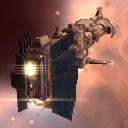
A passive fit with the rigs switched to Core Defense Field Extenders will give a 208dps omni tank with 61k EHP - not as strong as the Drake, and the damage isn't as high, but you can at least close range with the further off sleepers that spawn in some Class 1 and 2 sleeper sites.
There is the possibility of fitting twin 425mm Autocannon IIs instead of the probe launcher and salvager, but with short range tech 1 ammunition they will only provide a rather paltry 64 dps on top of the launchers, increasing it to 381. I'd go for the utility instead.
On with a sample PvP fit that is also active tanked:
This post will cover the Cyclone.
Overview
The Cyclone is a Minmatar Battlecruiser that has a bonus to Rate of Fire for Heavy Missile Launchers and Heavy Assault Missile Launchers - it should be noted that the bonus does not cover Rapid Light Missile Launchers - and a significant bonus to the effectiveness of shield boosters. It can field a single flight of medium drones or a flight of lights with another flight in reserve.
Cyclones are always seen fielding a shield tank both in k-space and wormhole space - although they have sufficient low slots to mount a semblance of an armour tank, doing so ignores their shield boost bonus and sacrifices one of their other advantages - their speed. The Cyclone is the fastest Battlecruiser in the game and they will generally be fit to take advantage of that - they are faster vanilla than a Hurricane is with two Nanofibers!
The Eve Altruist post covering the Cyclone and the other Battlecruisers can be found here.
What is it used for in wormhole space?
Cyclones are rarely seen in wormhole space; for a PvP ship something with a better tank or better damage output is preferable, and for PvE usage the mighty Drake still remains the favourite as it's resistance bonus works very well with a passive recharge tank. As with the other Battlecruisers, the main time they are used in wormhole space is by pilots without the wallet or skill points required to fly Tech 3 ships for PvP, and will only be seen in shield or 'kitchen sink' fleets - but this is far from abnormal in lower class wormhole systems.
How is it typically fit?
For a Cyclone PvE it in wormhole space pilots need to decide between trying to use the active tanking bonus that the Cyclone provides and the tank stability under neut pressure that a passive recharge fit gives you. As there are no other Battlecruisers that are likely to be active shield tanked running sleeper sites, I'm going to use an active tanked example, although you are more likely to see a passive tanked one running sites in practice.
[Cyclone, WH PvE]
Ballistic Control System II
Ballistic Control System II
Damage Control II
Ballistic Control System II
Power Diagnostic System II
Experimental 10MN Microwarpdrive I
Large Shield Booster II
Adaptive Invulnerability Field II
Cap Recharger II
Cap Recharger II
Heavy Missile Launcher II, Scourge Fury Heavy Missile
Heavy Missile Launcher II, Scourge Fury Heavy Missile
Heavy Missile Launcher II, Scourge Fury Heavy Missile
Heavy Missile Launcher II, Scourge Fury Heavy Missile
Heavy Missile Launcher II, Scourge Fury Heavy Missile
Salvager II
Core Probe Launcher I, Core Scanner Probe I
Medium Anti-EM Screen Reinforcer I
Medium Core Defense Capacitor Safeguard I
Medium Core Defense Capacitor Safeguard I
There is almost certainly some room for improvement available in this fit, but it gets you 317dps at a range of around 47km using Scourge Fury Heavy Missiles and an active tank of 277dps... while the capacitor holds out. That capacitor will last for three minutes of constant boosting as long as you're not running the Microwarpdrive at the same time - but the reality of running sleeper sites is that you only need the maximum boost amount for a relatively short time during the site - the rest of the time the incoming DPS is reduced through sleepers being destroyed and passive recharge helps with shield levels to a degree.
A passive fit with the rigs switched to Core Defense Field Extenders will give a 208dps omni tank with 61k EHP - not as strong as the Drake, and the damage isn't as high, but you can at least close range with the further off sleepers that spawn in some Class 1 and 2 sleeper sites.
There is the possibility of fitting twin 425mm Autocannon IIs instead of the probe launcher and salvager, but with short range tech 1 ammunition they will only provide a rather paltry 64 dps on top of the launchers, increasing it to 381. I'd go for the utility instead.
On with a sample PvP fit that is also active tanked:
[Cyclone, WH PvP]With a more limited engagement range and the use of Heavy Assault Missile Launchers the Cyclone can kick out 438dps to 17km with Rage missiles. Perhaps more significantly the lack of sleepers obsessively targetting drones means that a full flight of mediums can be fielded, jumping the damage to 567dps with Valkyrie IIs, or 596dps with Hammerhead IIs. If Rage missiles are substituted for Javelin missiles it can push out to 30km range but at the cost of the damage dropping to 292dps not inclusive of drones. With a pair of Adaptive Invulnerability Fields it ends up with 45k effective hit points with an extra 42k added by the Ancillary Shield Booster - assuming it manages to get all of it's charges off overheated. For smaller groups it's probably a good idea to switch an invulnerability field for a stasis webifier to help with damage application using the Heavy Assault Missiles, but for larger ones the extra tank is probably of more value.
Ballistic Control System II
Ballistic Control System II
Pseudoelectron Containment Field I
Ballistic Control System II
Co-Processor II
Experimental 10MN Microwarpdrive I
X-Large Ancillary Shield Booster, Cap Booster 400
Adaptive Invulnerability Field II
Faint Warp Disruptor I
Adaptive Invulnerability Field II
Heavy Assault Missile Launcher II, Nova Rage Heavy Assault Missile
Heavy Assault Missile Launcher II, Nova Rage Heavy Assault Missile
Heavy Assault Missile Launcher II, Nova Rage Heavy Assault Missile
Heavy Assault Missile Launcher II, Nova Rage Heavy Assault Missile
Heavy Assault Missile Launcher II, Nova Rage Heavy Assault Missile
Medium Unstable Power Fluctuator I
Small Unstable Power Fluctuator I
Medium Anti-EM Screen Reinforcer I
Medium Core Defense Field Extender I
Medium Core Defense Field Extender I
How much of a threat is it?
Running a site: A Cyclone on a site is very unlikely to be bait - all of the mid slots are required to fit enough tank to survive sleeper sites in a class 2 system and don't leave any room free for a point... nor does it have enough spare tanking capacity to survive any form of attack on top of the sleeper NPCs for any length of time. The amount of damage it can kick out is also on the lower end of the scale, so virtually any Tech 3 ship - even those with the least tank and gank - should be able to take one on solo.
As backup in a POS:
If a Cyclone is sat idling, expect it to be an active shield Heavy Assault Missile fit as that is the most dangerous. Realistically, relatively few are seen in wormhole space although use as a second responder where it can loiter out of point range and pour in firepower is one of the more likely applications.
On the field in a fight:
Any Cyclone in a fight is going to be able to apply its damage from outside of point range, and is likely to be relatively fast. Without long range web or fast tackle, running after a Cyclone is a good way to split up your fleet and other targets that you will be able to hold point on and apply damage against more effectively are likely to be better targets. Even if it looks like it is dying relatively fast, remember that it is likely to have an Ancillary Shield Booster fitted and at least half of it's tank is likely to come from boosting once it is near the end of its shield buffer - possible significantly more if it has links online, or the pilots has drugs or crystal implants available.
Remember that against the low signature radius of armour ships that make up the majority of wormhole brawling fleets the on-paper damage output of the Cyclone may well be significantly reduced, pushing it further down the target priority list. On the other side of the coin, most PVP Cyclone fits will be using at least one medium and one small energy neutralize, and the high speed and good damage projection means that it can be a considerable risk to logistics ships if left unchecked.
How do I counter it?
The Cyclone will not be vulnerable to tracking disruption due to its weapon system of choice and has no real reliance on its capacitor... so it's probably not the best idea to be fielding Curses or Pilgrims against them. Like the other Battlecruisers, the Cyclone is a reasonable target for jams if there is nothing higher priority such as e-war or logistics ships on the field, but unlike the others it is actually a reasonable target for sensor dampener as they can force it to close in to point range. The best counter, similar to the Drake, is pure damage, particularly in a larger battle where it may be possible to overwhelm the tank provided by the Ancillary Shield Booster.
Final note: If you encounter any inaccuracies on this page, please contact me ingame with an EVEMail to "Fellblade" or on twitter @OV_Fellblade and I'll try and get them sorted.
Final note: If you encounter any inaccuracies on this page, please contact me ingame with an EVEMail to "Fellblade" or on twitter @OV_Fellblade and I'll try and get them sorted.
Wednesday, 21 May 2014
Finding Fights in Wormhole Space
Wormhole Space Population
Although the vast majority of class 1 and 2 wormhole systems and many class 3 wormhole systems are occupied, it can often be difficult to find potential targets in wormhole space. The relative scarcity of active pilots is due to a number of factors, from the way wormhole links work to the normal forms of combat in wormhole space.In wormhole space there is a very significant driver towards having corporations that are only active in a single time zone - trust. Because of the issues with security in player owned stations, it is typical for only pilots that have been thoroughly background checked to be let in and even after the background checking their movements and actions will be scrutinized by other corporation members for anything that is suspicious. This oversight is clearly not as easily applied when a new pilot is online at different times to those that are already present, so expanding a corporation into a new timezone can be a very risky proposition.
Another limit on the number of pilots that are encountered is the nature of wormhole links and the space itself. Compare the speed of moving from one system to another between wormhole space and known space. In known space, you select a gate from the overview and you press 'jump'. You will warp to the gate and jump through it. In wormhole space, you need to launch probes and scan down a significant number of signatures to identify where the links are. Then you need to warp to the link and make a precise bookmark and (if you are being cautious) wait for the bookmark to show up for the rest of your corporation before jumping through the link, in case backup is needed.
Not only is the time to move from system to system significantly higher, but the risk of doing so is higher as well - polarization timers and short kick-out ranges when jumping mean that a practiced group has a much better chance of managing to decloak covert ships than they would in known space.
Yet another driver that encourages pilots to stay in the vicinity of their home system is the volatility of wormhole links; time limits are imprecise and encourage pilots not to jump through wormholes with less than 25% of their life left. Mass limits open up the very real possibility of a third party closing off the route home without any knowledge of a group that is out roaming - less of a problem for larger groups but a real risk for smaller wormhole corporations.
Getting Fights
It may sound obvious but in order to get fights in wormhole space you need potential targets to leave the relative safety of their POS forcefields (clearly this is ignoring sieging the POS as a way to generate a fight - generally beyond the capability of most small wormhole groups). The reason for leaving the POS can be generated by the players themselves due to their needs, or it can be generated by an external presence that they feel they have to respond to.Internal drivers for pilots to put themselves at risk are quite self explanatory;
- Doing planetary interaction for profit or POS fuel components
- Hauling POS fuel / ice products in from known space
- Hauling loot out to known space for sale
- Scouting the wormhole chain
- Running sites either in the home system or other systems in the chain
External drivers for pilots putting themselves at risk are simple in concept, but in practice is significantly more complex. You need to provide a compelling reason for them to abandon the safety of their POS force field and put their ship(s) into a combat situation; fundamentally you are trying to bait them into a fight.
The correct bait for a group can be very hard to determine; what will cause one corporation to rally everyone into combat ships and engage will cause another to flee the system entirely. Killboard records can be very useful for building up a picture of what a corporation is likely to engage or not. Some key points to look for are:
- Look at their kills; do they try and pick off haulers and miners, or do they take engagements against combat ships?
- If they lose scouts semi-regularly, they are probably fairly active in scouting their surrounding systems. Less obvious bait in an adjacent wormhole system may be more likely to attract their attention
- Do they attack site running ships? Look for example kills on their killboard and look at what their favoured targets are, or what ships they've been burned by in the past that other groups have used as bait against them.
- Do they avoid more robust targets like Tech 3 ships?
Subscribe to:
Posts (Atom)