Thursday, 19 June 2014

Know Your Wormhole Enemy: Cyclone

In the Know Your Wormhole Enemy series (name shamelessly stolen from the Eve Altruist series of posts and then mutilated) I'm going to look at a variety of different ships, how they are often fit and flown in wormhole space, and what they mean to you. This may include, but will not necessarily be limited to; example fits, engagement scenarios, how you should react to their presence on directional scan, at a POS or on grid, what good counters to them are, and how you can potentially use them.

This post will cover the Cyclone.
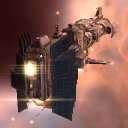


Overview

The Cyclone is a Minmatar Battlecruiser that has a bonus to Rate of Fire for Heavy Missile Launchers and Heavy Assault Missile Launchers - it should be noted that the bonus does not cover Rapid Light Missile Launchers - and a significant bonus to the effectiveness of shield boosters. It can field a single flight of medium drones or a flight of lights with another flight in reserve.

Cyclones are always seen fielding a shield tank both in k-space and wormhole space - although they have sufficient low slots to mount a semblance of an armour tank, doing so ignores their shield boost bonus and sacrifices one of their other advantages - their speed. The Cyclone is the fastest Battlecruiser in the game and they will generally be fit to take advantage of that - they are faster vanilla than a Hurricane is with two Nanofibers!

The Eve Altruist post covering the Cyclone and the other Battlecruisers can be found here.

What is it used for in wormhole space?

Cyclones are rarely seen in wormhole space; for a PvP ship something with a better tank or better damage output is preferable, and for PvE usage the mighty Drake still remains the favourite as it's resistance bonus works very well with a passive recharge tank. As with the other Battlecruisers, the main time they are used in wormhole space is by pilots without the wallet or skill points required to fly Tech 3 ships for PvP, and will only be seen in shield or 'kitchen sink' fleets - but this is far from abnormal in lower class wormhole systems.

How is it typically fit?

For a Cyclone PvE it in wormhole space pilots need to decide between trying to use the active tanking bonus that the Cyclone provides and the tank stability under neut pressure that a passive recharge fit gives you. As there are no other Battlecruisers that are likely to be active shield tanked running sleeper sites, I'm going to use an active tanked example, although you are more likely to see a passive tanked one running sites in practice.

[Cyclone, WH PvE]
Ballistic Control System II
Damage Control II
Ballistic Control System II
Power Diagnostic System II

Experimental 10MN Microwarpdrive I
Large Shield Booster II
Adaptive Invulnerability Field II
Cap Recharger II
Cap Recharger II

Heavy Missile Launcher II, Scourge Fury Heavy Missile
Salvager II
Core Probe Launcher I, Core Scanner Probe I

Medium Anti-EM Screen Reinforcer I
Medium Core Defense Capacitor Safeguard I
There is almost certainly some room for improvement available in this fit, but it gets you 317dps at a range of around 47km using Scourge Fury Heavy Missiles and an active tank of 277dps... while the capacitor holds out. That capacitor will last for three minutes of constant boosting as long as you're not running the Microwarpdrive at the same time - but the reality of running sleeper sites is that you only need the maximum boost amount for a relatively short time during the site - the rest of the time the incoming DPS is reduced through sleepers being destroyed and passive recharge helps with shield levels to a degree.

A passive fit with the rigs switched to Core Defense Field Extenders will give a 208dps omni tank with 61k EHP - not as strong as the Drake, and the damage isn't as high, but you can at least close range with the further off sleepers that spawn in some Class 1 and 2 sleeper sites.

There is the possibility of fitting twin 425mm Autocannon IIs instead of the probe launcher and salvager, but with short range tech 1 ammunition they will only provide a rather paltry 64 dps on top of the launchers, increasing it to 381. I'd go for the utility instead.

On with a sample PvP fit that is also active tanked:

[Cyclone, WH PvP]
Ballistic Control System II
Pseudoelectron Containment Field I
Ballistic Control System II
Co-Processor II

Experimental 10MN Microwarpdrive I
X-Large Ancillary Shield Booster, Cap Booster 400
Adaptive Invulnerability Field II
Faint Warp Disruptor I
Adaptive Invulnerability Field II

Heavy Assault Missile Launcher II, Nova Rage Heavy Assault Missile
Medium Unstable Power Fluctuator I
Small Unstable Power Fluctuator I

Medium Anti-EM Screen Reinforcer I
Medium Core Defense Field Extender I
With a more limited engagement range and the use of Heavy Assault Missile Launchers the Cyclone can kick out 438dps to 17km with Rage missiles. Perhaps more significantly the lack of sleepers obsessively targetting drones means that a full flight of mediums can be fielded, jumping the damage to 567dps with Valkyrie IIs, or 596dps with Hammerhead IIs. If Rage missiles are substituted for Javelin missiles it can push out to 30km range but at the cost of the damage dropping to 292dps not inclusive of drones. With a pair of Adaptive Invulnerability Fields it ends up with 45k effective hit points with an extra 42k added by the Ancillary Shield Booster - assuming it manages to get all of it's charges off overheated. For smaller groups it's probably a good idea to switch an invulnerability field for a stasis webifier to help with damage application using the Heavy Assault Missiles, but for larger ones the extra tank is probably of more value.

How much of a threat is it?

Running a site: A Cyclone on a site is very unlikely to be bait - all of the mid slots are required to fit enough tank to survive sleeper sites in a class 2 system and don't leave any room free for a point... nor does it have enough spare tanking capacity to survive any form of attack on top of the sleeper NPCs for any length of time. The amount of damage it can kick out is also on the lower end of the scale, so virtually any Tech 3 ship - even those with the least tank and gank - should be able to take one on solo.

As backup in a POS:
If a Cyclone is sat idling, expect it to be an active shield Heavy Assault Missile fit as that is the most dangerous. Realistically, relatively few are seen in wormhole space although use as a second responder where it can loiter out of point range and pour in firepower is one of the more likely applications.

On the field in a fight:
Any Cyclone in a fight is going to be able to apply its damage from outside of point range, and is likely to be relatively fast. Without long range web or fast tackle, running after a Cyclone is a good way to split up your fleet and other targets that you will be able to hold point on and apply damage against more effectively are likely to be better targets. Even if it looks like it is dying relatively fast, remember that it is likely to have an Ancillary Shield Booster fitted and at least half of it's tank is likely to come from boosting once it is near the end of its shield buffer - possible significantly more if it has links online, or the pilots has drugs or crystal implants available.

Remember that against the low signature radius of armour ships that make up the majority of wormhole brawling fleets the on-paper damage output of the Cyclone may well be significantly reduced, pushing it further down the target priority list. On the other side of the coin, most PVP Cyclone fits will be using at least one medium and one small energy neutralize, and the high speed and good damage projection means that it can be a considerable risk to logistics ships if left unchecked.

How do I counter it?

The Cyclone will not be vulnerable to tracking disruption due to its weapon system of choice and has no real reliance on its capacitor... so it's probably not the best idea to be fielding Curses or Pilgrims against them. Like the other Battlecruisers, the Cyclone is a reasonable target for jams if there is nothing higher priority such as e-war or logistics ships on the field, but unlike the others it is actually a reasonable target for sensor dampener as they can force it to close in to point range. The best counter, similar to the Drake, is pure damage, particularly in a larger battle where it may be possible to overwhelm the tank provided by the Ancillary Shield Booster.

Final note: If you encounter any inaccuracies on this page, please contact me ingame with an EVEMail to "Fellblade" or on twitter @OV_Fellblade and I'll try and get them sorted.

Wednesday, 21 May 2014

Finding Fights in Wormhole Space

Wormhole Space Population

Although the vast majority of class 1 and 2 wormhole systems and many class 3 wormhole systems are occupied, it can often be difficult to find potential targets in wormhole space. The relative scarcity of active pilots is due to a number of factors, from the way wormhole links work to the normal forms of combat in wormhole space.

In wormhole space there is a very significant driver towards having corporations that are only active in a single time zone - trust. Because of the issues with security in player owned stations, it is typical for only pilots that have been thoroughly background checked to be let in and even after the background checking their movements and actions will be scrutinized by other corporation members for anything that is suspicious. This oversight is clearly not as easily applied when a new pilot is online at different times to those that are already present, so expanding a corporation into a new timezone can be a very risky proposition.

Another limit on the number of pilots that are encountered is the nature of wormhole links and the space itself. Compare the speed of moving from one system to another between wormhole space and known space. In known space, you select a gate from the overview and you press 'jump'. You will warp to the gate and jump through it. In wormhole space, you need to launch probes and scan down a significant number of signatures to identify where the links are. Then you need to warp to the link and make a precise bookmark and (if you are being cautious) wait for the bookmark to show up for the rest of your corporation before jumping through the link, in case backup is needed.

Not only is the time to move from system to system significantly higher, but the risk of doing so is higher as well - polarization timers and short kick-out ranges when jumping mean that a practiced group has a much better chance of managing to decloak covert ships than they would in known space.

Yet another driver that encourages pilots to stay in the vicinity of their home system is the volatility of wormhole links; time limits are imprecise and encourage pilots not to jump through wormholes with less than 25% of their life left. Mass limits open up the very real possibility of a third party closing off the route home without any knowledge of a group that is out roaming - less of a problem for larger groups but a real risk for smaller wormhole corporations.

Getting Fights

It may sound obvious but in order to get fights in wormhole space you need potential targets to leave the relative safety of their POS forcefields (clearly this is ignoring sieging the POS as a way to generate a fight - generally beyond the capability of most small wormhole groups). The reason for leaving the POS can be generated by the players themselves due to their needs, or it can be generated by an external presence that they feel they have to respond to.

Internal drivers for pilots to put themselves at risk are quite self explanatory;

  • Doing planetary interaction for profit or POS fuel components
  • Hauling POS fuel / ice products in from known space
  • Hauling loot out to known space for sale
  • Scouting the wormhole chain
  • Running sites either in the home system or other systems in the chain
The challenge then becomes getting into position and intercepting the pilots without them realizing they are being hunted until it is to late.

External drivers for pilots putting themselves at risk are simple in concept, but in practice is significantly more complex. You need to provide a compelling reason for them to abandon the safety of their POS force field and put their ship(s) into a combat situation; fundamentally you are trying to bait them into a fight.

The correct bait for a group can be very hard to determine; what will cause one corporation to rally everyone into combat ships and engage will cause another to flee the system entirely. Killboard records can be very useful for building up a picture of what a corporation is likely to engage or not. Some key points to look for are:
  • Look at their kills; do they try and pick off haulers and miners, or do they take engagements against combat ships?
  • If they lose scouts semi-regularly, they are probably fairly active in scouting their surrounding systems. Less obvious bait in an adjacent wormhole system may be more likely to attract their attention
  • Do they attack site running ships? Look for example kills on their killboard and look at what their favoured targets are, or what ships they've been burned by in the past that other groups have used as bait against them.
  • Do they avoid more robust targets like Tech 3 ships?
There's a significant degree of gut instinct on what should be used to tempt potential targets into the open. The only way to cultivate that instinct is to try it again and again, and try and work out why it works when it does, and why it doesn't when it doesn't.

Tuesday, 29 April 2014

Strategic Scouting minor update

The post on Strategic Scouting in Wormhole Space has been updated to reflect the demise of http://wormhol.es and that http://wh.pasta.gg has taken up the mantle. A small section highlighting the alternatives to the all-in-one intel sites has also been added.

If there are any additional aspects you'd like covered or have questions about, drop a comment on ones of the posts

Thursday, 24 April 2014

Know Your Wormhole Enemy: Hurricane

In the Know Your Wormhole Enemy series (name shamelessly stolen from the Eve Altruist series of posts and then mutilated) I'm going to look at a variety of different ships, how they are often fit and flown in wormhole space, and what they mean to you. This may include, but will not necessarily be limited to; example fits, engagement scenarios, how you should react to their presence on directional scan, at a POS or on grid, what good counters to them are, and how you can potentially use them.

This post will cover the Hurricane.


Overview

The Hurricane is a Minmatar Battlecruiser that has bonuses to both Damage and Rate of Fire for Medium Projectile Turrets. This double damage bonus can result in some dangerously high dps figures with - thanks to the projectile turrets - selectable damage types. It can field a single flight of light drones.

Hurricanes are seen often with both shield and armour tanks in known and wormhole-space thanks to both the slot layout and base hitpoint values being well balanced. They are one of the faster Battlecruisers around, although that takes a hit with the armour variants. Hurricanes will almost always be passively tanked, and their effective hit point totals will generally be around that of the Harbinger, and lower than that of the Brutix or Drake.

The Eve Altruist post covering the Hurricane and the other Battlecruisers can be found here.

What is it used for in wormhole space?

The Hurricane is used for both PvE and PvP in lower class wormhole systems. While they are far from the ideal PvE boat even for lower class wormholes, they can hold their own in class 1-2 systems and can run as part of a fleet in class 3 wormhole systems. As with the other Battlecruisers, they are often used by pilots without the wallet or skill points required to fly Tech 3 ships for PvP, and are seen in both shield and armour PvP fleets.

How is it typically fit?

There is no standard PvE fit for Hurricanes; they are significantly worse for running sites than Harbingers or Drakes and I would put them on par with the Brutix. As with the Brutix there is a damage application issue with the weapons systems that the Hurricane can use; Autocannons have excellent tracking but a relatively short range, and Artillery has excellent range but relatively poor tracking. A sample passive shield recharge Autocannon fit is below;

[Hurricane, PvE Passive Shield]
Shield Power Relay II
Gyrostabilizer II
Gyrostabilizer II
Gyrostabilizer II
Damage Control II

Large Shield Extender II
Experimental 10MN Microwarpdrive I
Large Shield Extender II
Adaptive Invulnerability Field II

425mm AutoCannon II, EMP M
Core Probe Launcher I, Core Scanner Probe I

Medium Core Defense Field Purger I
The fit above can kick out ~520dps using vanilla EMP ammunition, excluding drones, but only out to a range of 1.5km. At 13.5km it will be much closer to 270dps - but it can close range at a reasonable 1.3km/s. The tank of 215dps omni is enough for Class 1 and 2 wormhole sites, but will struggle in Class 3's - even when running in a fleet the damage kicked out can mean that a shield Hurricane has to warp away repeatedly. The energy neutralizers fielded by the Sleeper NPCs can rapidly turn the shield hardeners off, as the Hurricane's capacitor recharge is crippled by the Shield Power Relays. Artillery fits are also viable, but suffer somewhat due to the lack of a tracking bonus on the Hurricane hull. Active armour tanks are also possible, but tend to kick out less damage, and tank less damage, and do it with an increased reliance on capacitor. So I wouldn't use them unless you don't have any other option. Expect site running Hurricanes to have a flight of ECM drones for a getaway.

The PvP fit I'm going to show below is an armour example, for variety. If you convert the PvE fit above to a PvP fit you will need to:
  1. Swap out the Core Defense Field Purgers for Core Defense Field Extenders
  2. Swap the Core Probe Launcher for a Medium Neut
  3. Switch out two 425mm Autocannons for 220mm Autocannons
  4. Swap the two Shield Power Relays for two Tracking Enhancers, or one and a Nanofiber
That will give you 587dps using Republic Fleet EMP M with really nice tracking and 1.4km/s when running MWD if you chose the Nanofiber option. With the maximum drone damage loadout the damage will peak at a shade off of 700dps - but the majority of the time the Hurricane will be in falloff and not living up to it's full potential. Note that my preferred fit for a PvP shield Hurricane in wormhole space does not include a point. This gives it an omni tank of about 60k EHP - the Hurricane is likely to be primaried fairly early on and it will find it hard to make use of the speed advantage over other Battlecruisers in wormhole systems. Rely on some friends bringing tackle with them, and ensure the Fleet Commander knows that you don't have any!

On with a sample PvP armour fit:

[Hurricane, PvP Armour]
1600mm Reinforced Rolled Tungsten Plates I
Gyrostabilizer II
Energized Adaptive Nano Membrane II
Gyrostabilizer II
Damage Control II

10MN Microwarpdrive II
ECCM - Magnetometric II
Stasis Webifier II
Warp Scrambler II

220mm Vulcan AutoCannon II, Republic Fleet EMP M
Dual 180mm AutoCannon II, Republic Fleet EMP M
Medium Unstable Power Fluctuator I

Medium Trimark Armor Pump I

Hammerhead II x1
Hobgoblin II x4
The fit above has a tonne of different options available to tweak it, but the headline figures are 609dps including a full flight of damage drones, a 68k EHP tank, and a top speed of just over 1km/s. You can easily drop one or both Gyrostabilizers for more tank, possibly going for hardeners instead of energized plating, but that does take away one rather significant advantage that this ship has going for it - it has an entirely passive tank and weapons that use no capacitor either. The only modules that use any capacitor are the midslots and if you are worried about being under heavy energy neutralizer pressure, you can always switch the Medium Neutralizer for a Medium Nosferatu. If it's being used for bait in a PvP engagement the size of the guns can be dropped a size, the medium Neut dropped a size, and double plating put on for a surprisingly large EHP total.

The ECCM in the mid-slots can be switched for any other electronic warfare module that you might find useful, giving the 'cane quite a bit of flexibility. If you're going heavy on tank and using active hardeners it may well be worth switching the ECCM for a capacitor booster.

How much of a threat is it?

Running a site: Site running Hurricanes should not be regarded as a significant threat, and are almost certainly not bait. The number of slots they have to dedicate to get a reasonable shield tank precludes having any tackle, and unlike a Drake they cannot make do with Core Defense Field Extenders in their rig slots - they need to use Core Defense Field Purgers to increase the passive recharge and so have significantly lower total EHP. If the Hurricane is using an active armour fit for site running it similarly won't have the total EHP to be bait, and will easily be neuted out and killed.

As backup in a POS:
The Hurricane is a good backup ship for PvP in wormhole space. Inexpensive enough to be thrown away if needed, and the pilot can make a good guess as to damage type while in warp to the location of the combat - so there's a decent chance it will be your resistance hole that will be being hit when it arrives. If there's a manned Hurricane sat at a player owned station in a lower-class wormhole system, it's even odds as to whether it's PvP fit or not - and that won't necessarily govern whether it comes to assist with any fight or not.

On the field in a fight:
The Hurricane with Autocannons has a deficit in pure DPS compared to a Brutix with Blasters, but that is offset by better tracking, better damage projection and selectable damage types. In my experience the Brutix is probably a more important target than an armour Hurricane if logistics are on the field and targets are taking a while to die, as it can travel to closer range and then apply it's damage. In a fight where logistics is not present and targets are dying quickly, or where the action is spread over a slightly larger range, the Hurricane will generally be the better target.

How do I counter it?

In it's PvP armour fit the Hurricane is less susceptible to both capacitor warfare and tracking disruption than the Brutix or Harbinger, so the Gallente and Amarr Battlecruisers are better targets for those particular e-war types. Shield fits can have their hardeners shut off with energy neutralizer pressure, so a may still be a viable target for neuts if you suspect it is shield fit. Pure damage is the most effective way of dealing with the Hurricane; it's often a good idea to put a bit of fire onto a Hurricane to see how it's shield holds up; if any shield tank is present, it's a good primary target as it will be kicking out significantly more damage than the armour variant, with a significantly weaker tank. Drawing it into the fight by switching sides of a wormhole link is also a good way to get it into a position where it's Autocannons will have their range advantage over Blasters reduced.

Final note: If you encounter any inaccuracies on this page, please contact me ingame with an EVEMail to "Fellblade" or on twitter @OV_Fellblade and I'll try and get them sorted.

Sunday, 13 April 2014

Tactical Scouting in Wormhole Space

This post will be looking at scouting for targets in wormhole space; it will not be looking at whether engaging those targets is a good idea or not, but at the mechanics of how to find them and get into a position to attack them.

On entering a new system

After entering a new system and bookmarking the way out, a scout should hold their jump cloak and do a directional scan. The d-scan results need to be assessed quickly and some key pieces of information gathered from them:
  • Are there any player owned stations? If so, are they active
  • Are there wrecks present? If so, someone is either currently running or has just finished running sites in the wormhole
  • Are there ships present?
If there are no ships visible, the scout should immediately break their jump cloak and turn on their normal cloak; this ensures that if any ships get into range afterwards they won't have a chance of catching the scout on their directional scanner. Prior to launching any probes, the scout should check if the system has celestial bodies or sites outside of directional scan range, and if so warp around them system and verify that there are no ships present there.

If there are no ships active in the system, then it's on with the task of scanning out any further links or sites of interest. If there are ships active, then it's time to work out where they are in the system. There are a loose set of rules for quickly identifying where ships are likely to be given their type and other:
  • If wrecks are on scan, someone has been running a site. Use directional scan on the solar system map or in the world using the system sensor overlay to determine which site the wrecks are at. If the wrecks are at a position that is not co-incident with a cosmic anomaly, scan probes will be needed to find it - if the site still exists. This will be covered in more detail in the 'Finding targets at a cosmic signature' section.
  • If a mobile tractor unit is on d-scan someone will have been, and may still be, running a site - even if there aren't wrecks visible. Many people will use a mobile tractor unit to collate wrecks to salvage while they orbit it and kill sleepers with longer ranged weapons.
  • If there are any Mining Barges or Ventures on directional scan, use a narrow-band scan to verify whether they are at any ore sites.
  • Use directional scan towards planets and moons to pin point the position of hostile player owned stations, and verify if there are any ships at them.
With some practice (and assuming a reasonable number of signatures) it is perfectly feasible to do this all within the 60-second limit imposed by the jump cloak timer. Bear in mind that the spawning of the inbound wormhole into the system may well have alerted the people inside the system.


Finding targets at a cosmic signature

The harder part of finding targets is when they are at a de-spawned site, or at a cosmic anomaly. If the site that the targets are at has de-spawned, combat probes will be needed to scan down their location by getting a hit on the ships in question. If the targets are at a cosmic signature, core probes can be used to identify their location. In either case, the key is to have your probes visible on directional scan for as short a period as possible.

The best way of having your probes on directional scan for as short a time as possible is to identify the position of the targets without having your probes out at all. Use the directional scanner to identify their position in space, progressively narrowing the angle and altering the range to get a solid fix on their position. It can help to warp to multiple places in the system to help triangulate the target's location. When you think you have a reasonable fix, hit the 'scan' button, and hopefully you'll have a solid hit on the target's location in the first pass. Time taken to verify the target's position before hitting the scan button is well invested; if two (or three) scans with probes are needed to narrow down the target's position, they will most likely be long gone. As soon as you have a fix on the signature the targets are at or one of their ships, either warp the probes out of directional scan range in the system, recall them, or self destruct them.

Getting eyes on the targets

Once targets have been found the safest way to get into a position to attack them is to warp the signature of the site or ship at 100km. This will not be in warp range, as it will be too close, but you can bookmark the position 100km off, then warp back to your original position and warp to you 100km bookmark at 100km. This should easily put you beyond the minimum warpable distance - 150km - and allow you to select a location to warp to in order to end up in point range of the target. Wrecks make excellent warp destinations, especially if the target in question is salvaging as they go - although it should be noted that you cannot warp to a wreck that currently has a tractor beam active on it.

And now you get to find out whether that target is a trap or not!

Thursday, 3 April 2014

Know Your Wormhole Enemy: Brutix

In the Know Your Wormhole Enemy series (name shamelessly stolen from the Eve Altruist series of posts and then mutilated) I'm going to look at a variety of different ships, how they are often fit and flown in wormhole space, and what they mean to you. This may include, but will not necessarily be limited to; example fits, engagement scenarios, how you should react to their presence on directional scan, at a POS or on grid, what good counters to them are, and how you can potentially use them.

This post will cover the Brutix.


Overview

The Brutix is a Gallante Battlecruiser that has bonuses to Medium Hybrid Turret damage and the amount replenished by Armour Repairers. The bonus to active armour tanking means that despite the disadvantages that armour tanked ships have in lower-class wormhole combat sites, the Brutix can manage them reasonably well. Although its tanking bonus only applies to active tanking, the Brutix is often used with a buffer tank for PvP. The majority of the Brutix's damage is applied at point blank range with Blasters, but it is capable of fielding a full flight of medium drones, which improves damage application a little and adds significantly to the headline DPS figures.

Shield tanked Brutixes are occasionally seen in wormhole space (as in known space) and although their tank is lackluster to say the most, the damage they can kick out ranges from "very very high" to "terrifying".

The Eve Altruist post covering the Brutix and the other Battlecruisers can be found here.

What is it used for in wormhole space?

The Brutix is a mainstay of PvP armour fleets in lower-class wormholes, used for brawling at point blank ranges. It doesn't have the staying power of a Tech III Strategic Cruiser, but can match the firepower of a Proteus and will cost around a fifth of the price. For newer pilots with lower skill point totals or limited wallets the Brutix is a fantastic stepping stone towards the Proteus. It handles in a similar fashion to its more capable brethren and allows a pilot to get used to the limitations of hybrid weaponry and managing their position in a fight without putting as much on the line.

Similar to the Harbinger and most of the other Battlecruisers, the Brutix is capable of running combat sites in class 1 and 2 wormholes and can run sites in class 3 wormholes alongside a fleet. The issues with active armour tanking for site running in wormhole space hold true for the Brutix as they did for the Harbinger. Also similar to the Harbinger, the Brutix can be used for harvesting gas sites after clearing them of Sleepers.

How is it typically fit?

There is no real 'standard' PvE fit for Brutixes; I have come across both Blaster and Railgun fit site runners. Both have significant downsides - an example Railgun fit is provided below:

[Brutix, PvE]
Energized Adaptive Nano Membrane II
Damage Control II
Medium Armor Repairer II
Magnetic Field Stabilizer II
Tracking Enhancer II

Experimental 10MN Afterburner I
Cap Recharger II
Cap Recharger II
Stasis Webifier II

Coreli A-Type Small Remote Armor Repairer
250mm Railgun II, Antimatter Charge M

Medium Auxiliary Nano Pump I
Medium Capacitor Control Circuit I

Warrior II x5
Hornet EC-300 x5
The problem with site running Brutixes is that neither Railguns or Blasters are a very good match for the varied target profiles that Sleepers provide compared to the Pulse Lasers that Harbingers can field. Railguns have the range necessary to engage the sleepers without too much time spent burning around the site and alongside the warriors kick out around 500dps, but the tracking on them is sub-par and thus the sleeper frigates can be problematic to engage. To clear the frigates out in any reasonable time frame, drones are required - but sleeper AI has a tendency to prioritize drones, especially when only a single ship is running the site. That's why the fit packs a remote armour repairer - because otherwise you're going to be going through a lot of Warrior IIs. An additional problem with the Railgun fit Brutix is that if you are engaged while you are running a site, there is a very good chance you won't be able to land any fire on your attackers as long as they orbit you at reasonably close range. Just as well you have some EC-300s to try and land a jam...

Blaster fit Brutixes have a different problem; the tracking is good enough that the extra 50 or so dps that they buy you will actually be applied... but only when you're within range. and the effective range is about 2-8km. That means a lot of burning around, and that means getting a Micro Warp Drive fit and accepting the capacitor penalty associated with it. In contrast to the Railgun fit, an unwary attacker that drops on a Blaster-fit Brutix could end up with a fairly bloodied nose. One caveat is that if you decide to forgo the two sets of light drones and go for either medium ECM or damage drones, you will be vulnerable to being pinned down by Stealth Bombers at long point range. Even with the sets of light drones, it's advisable to pack some Null M to allow you to try and get some damage out to around 20km.

A typical Brutix set up for PvP will be buffer fit;

[Brutix, Armour Brawler]
Magnetic Field Stabilizer II
1600mm Reinforced Steel Plates II
Damage Control II
Energized Adaptive Nano Membrane II
Energized Explosive Membrane II

Experimental 10MN Microwarpdrive I
Warp Scrambler II
Stasis Webifier II
ECCM - Magnetometric II

Small Nosferatu II
Heavy Ion Blaster II, Caldari Navy Antimatter Charge M
Heavy Electron Blaster II, Caldari Navy Antimatter Charge M

Medium Trimark Armor Pump I

Hammerhead II x5
The above fit needs a +1% power grid implant to fit; alternatively one of the Ion Blasters can be demoted to an Electron Blaster, or the Tech II 1600mm plating can be exchanged for a 1600mm Reinforced Rolled Tungsten Plates I. Including drones it kicks out a respectable 680dps with Caldari Navy Antimatter; if you care about the numbers rather than the actual applied damage you can sacrifice the tracking and put Void in for just under 730dps. The tank is a respectable 82k omni with a flat resist profile of 67-72%.

The ECCM in the midslot can be switched for alternative electronic warfare modules as desired, and the tackle can be changed up as the situation calls for. Dropping a Cap Booster into the midslots is also a completely reasonable option as it will lessen the vulnerability to capacitor warfare.

When flying it significant care needs to be taken to ensure that you are inside the narrow band of effective ranges for its blasters


How much of a threat is it?

Running a site: A Brutix running a site is not a massive threat; it should be easy to identify whether it is Blaster or Railgun fit and then the suitable range to engage it at can be selected. The tank is borderline for class 2 system combat sites and 400dps or so should be enough to push it over the edge. Expect ECM drones to be present.

As backup in a POS:
The Brutix is one of the more dangerous Battlecruisers as a second responder; it can be warped into the fight at a position to do the most damage and with enough forewarning can have ewar suited to the fight it is ploughing into. A bubble being present around the fight can draw it out of warp into a less favorable position and force it to take some time to manoeuvre so it can apply its damage.

On the field in a fight:
The damage that a Brutix kicks out is significant - particularly if it is a shield Brutix - but short ranged. Although the damage is high and there is the potential for electronic warfare to be fielded by them, the substantial tank on armour variants means that they will rarely be the primary target if there are other Battlecruisers on the field. If there are targets with a higher firepower to tank ratio than the Brutix, they will clearly be a better target and if the Brutix's firepower can be mitigated by a faster fleet keeping out of range they can be knocked further down the target priority list.


How do I counter it?

The Brutix has short range weapons, and so simply staying away from it as much as possible goes a long way to mitigating it's damage. If you have any long range webs on the field these can be used to hold a Brutix at arm's reach and prevent it from applying its formidable dps effectively. Blasters don't have the best tracking so if there are relatively few hostile webs on the field applying a Tracking Disruptor with a Tracking Script can mitigate some of the damage. Failing that Tracking Disruptors with Range Scripts can reduce the already poor damage projection of Blasters to 'terrible'.

Energy Neutralizers and ECM will have varying effectiveness according to what the Brutix has fit in its mid slots. Pay attention to the visual effects and any applied electronic warfare coming from the Brutix during the fight and apply your own ewar to taste.

Although the Brutix's total EHP is good and the resistance profile is flat the resistances aren't ridiculously high, so it won't hold up under logistics repairs as well as Tech II or Tech III hulls.

Final note: If you encounter any inaccuracies on this page, please contact me ingame with an EVEMail to "Fellblade" or on twitter @OV_Fellblade and I'll try and get them sorted.

Tuesday, 1 April 2014

Skilling Up for Wormhole Life

Our corporation is not adverse to recruiting players with what most people would consider a low number of skill points - although our recruitment is very selective. As a result we're often in a position where a relatively new player is asking what they should be training next - or first - for wormhole life. And so we've come up with a fairly standard process to identify what new pilots should train for in order to be able to take part in corporation activities - both PvE and PvP.

The Basics

There's a core set of skills that anyone living in a wormhole needs - scanning skills that give you the fundamental ability to find your way around. For a very new player a covert ops scanning frigate is probably not the best thing to immediately train for. The ability to do some basic scouting but take part in other corporate operations or otherwise experience the variety of activities in wormhole space will do more to engage a new player than allowing them to simply find their way around a bit better.

  • Astrometrics IV
  • Astrometric Rangefinding III
  • Astrometric Pinpointing III
  • Astrometric Acquisition III
  • Racial Frigate IV
  • Cloaking I
This set of skills will allow a Tech I probing frigate to be used, cloaked, and scan quickly enough that it isn't an overly painful chore.

The Rest

The next set of skills is determined by what the corporation tends to fly - or is intending to fly, if they are newly moving into wormholes. Corporations that are aiming to be half way competent in PvP should generally have a mainstay fleet that is either armour or shield based. In lower class wormholes a shield-based fleet is often used as that is what is used for site running. Because newer pilots in lower class wormholes  and the skill points per pilot is generally lower. In higher-class wormholes this will tend to be armour based as armour tanking tends to lend itself to the close range brawling engagements that characterize wormhole space fights, as noted in my posts here and here.

Wherever possible players should look to train skills that give the biggest "bang for buck" - enabling more ships and playstyles or improving their abilities in multiple ships and playstyles. To give some concrete examples:

  • If the corporation is based in a Class 2 wormhole system and uses shield fleets for PvP, training towards a Drake is probably a good choice. It will allow the pilot to run the combat sites in the home system, and will give them a platform with a solid tank and good damage projection to use in PvP.
    • Once missile and shield tank skills are trained to a reasonable degree of competence, training into Hybrid Turrets allows the pilot to leverage the existing skills to usefully fly a Ferox.
    • The addition of Gallente Battlecruiser skills will then allow the pilot to fly a reasonable shield Brutix as they already have the weapons systems and tanking skills trained.
    • The addition of Minmatar Battlecruiser allows the pilot to fly the Cyclone, leveraging the existing shield and missile skills
  • If the corporation is based in a Class 2 wormhole system and uses armour fleets for PvP, training towards a Brutix or Harbinger is probably a good choice. Although they cannot run combat sites in a class 2 system as easily or cost effectively as a Drake, they can do so - and skills that improve their effectiveness will help both PvE site running and PvP
    • Training gunnery support skills allows fairly rapid cross training into other race's Battlecruisers as the support skills are (for the most part) shared between all three weapons systems
Another potential option that should probably be looked at is the Gnosis Battlecruiser. Although this limited edition ship is significantly more expensive than other Battlecruisers, it provides a flat bonus to all weapons systems that is equivalent to level V skills for any other race-specific Battlecruiser. It also provides significant bonuses to scanning.

When the pilot wants to start instigating fights in wormholes instead of providing second responder ships, stealth bombers are a good first step - and skills that go towards stealth bombers open up tech II scouting ships, meaning probing is faster and safer.

Getting something a little more durable for instigating fights and providing tackle means looking either at Tech III strategic cruisers or a Stratios. Both are expensive, and the Stratios requires Amarr and Gallente Battlecruiser skills, which may be a significant cross-train if the pilot is currently skilled for flying the Drake.